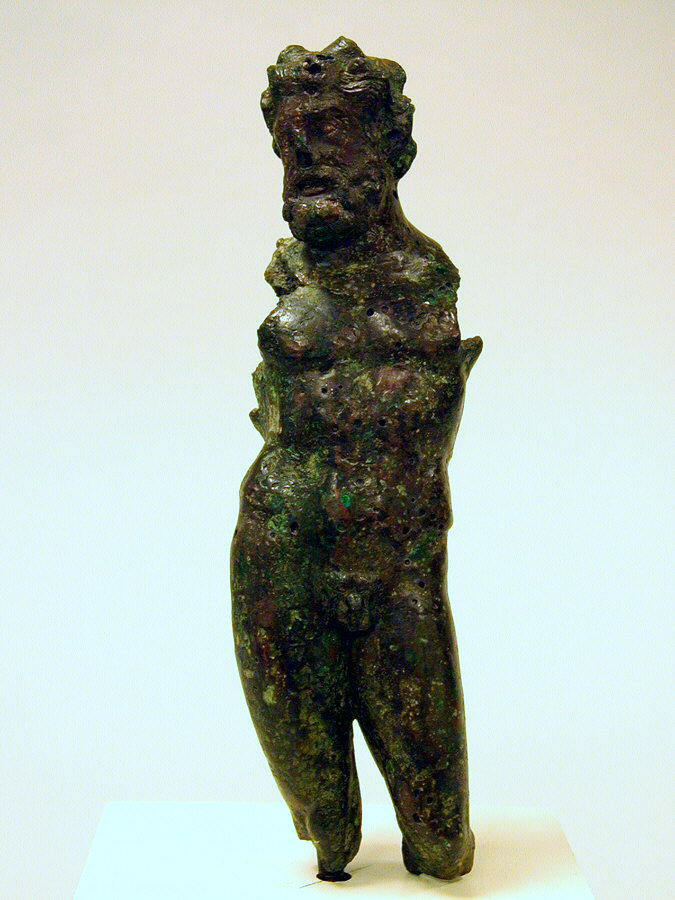
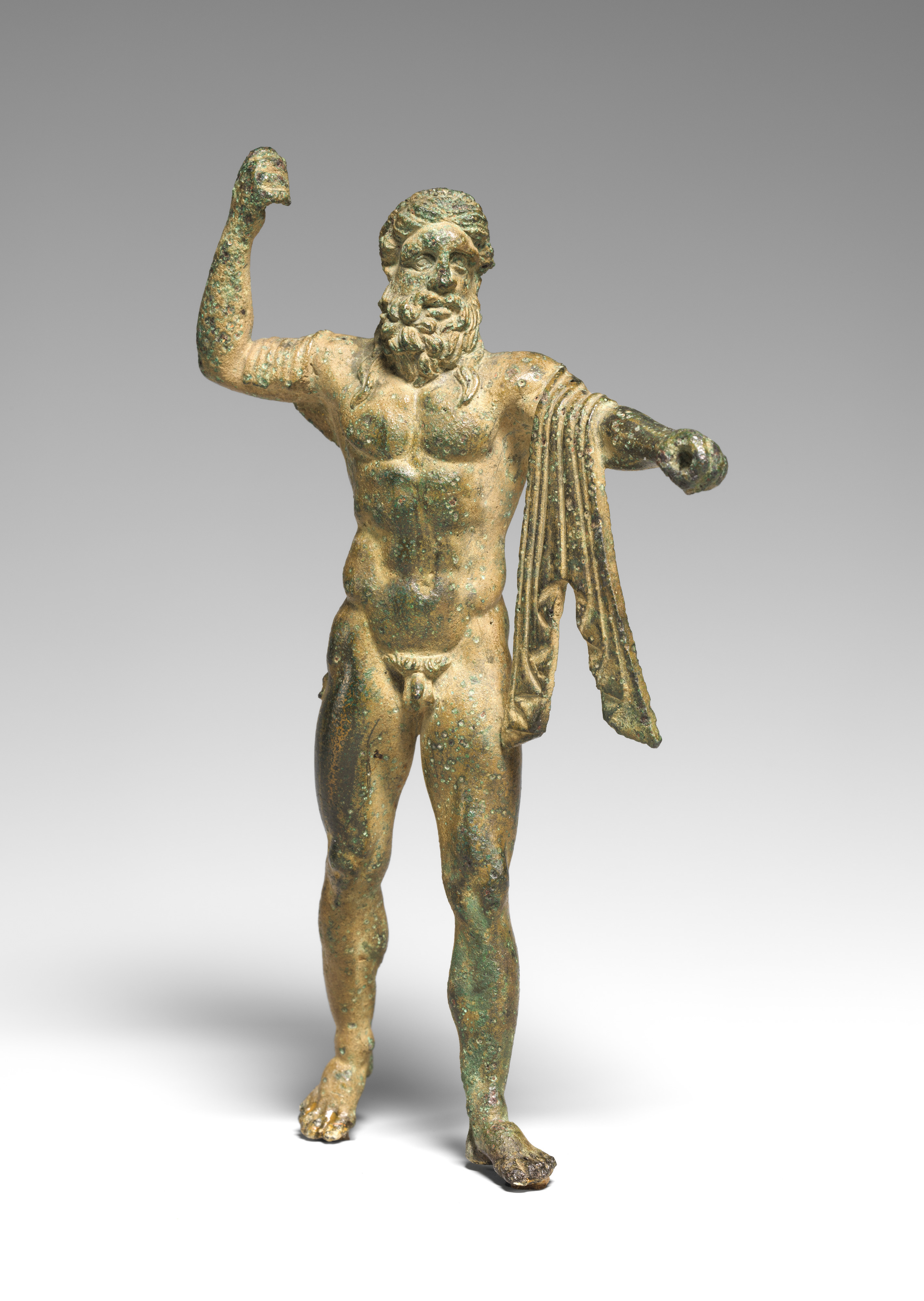
Poseidon
God of the sea, earthquakes, and horses; brother and rival of Zeus, and rival of Athena for Athens.
Who they are
- He is 'Earth-shaker' (ennosigen) — god of earthquakes as well as the sea [S1]S1 · Hesiod, Theogonyc. 700 BCEtextOpen source ↗[S2]S2 · Homer, Iliadc. 750 BCEtextOpen source ↗.
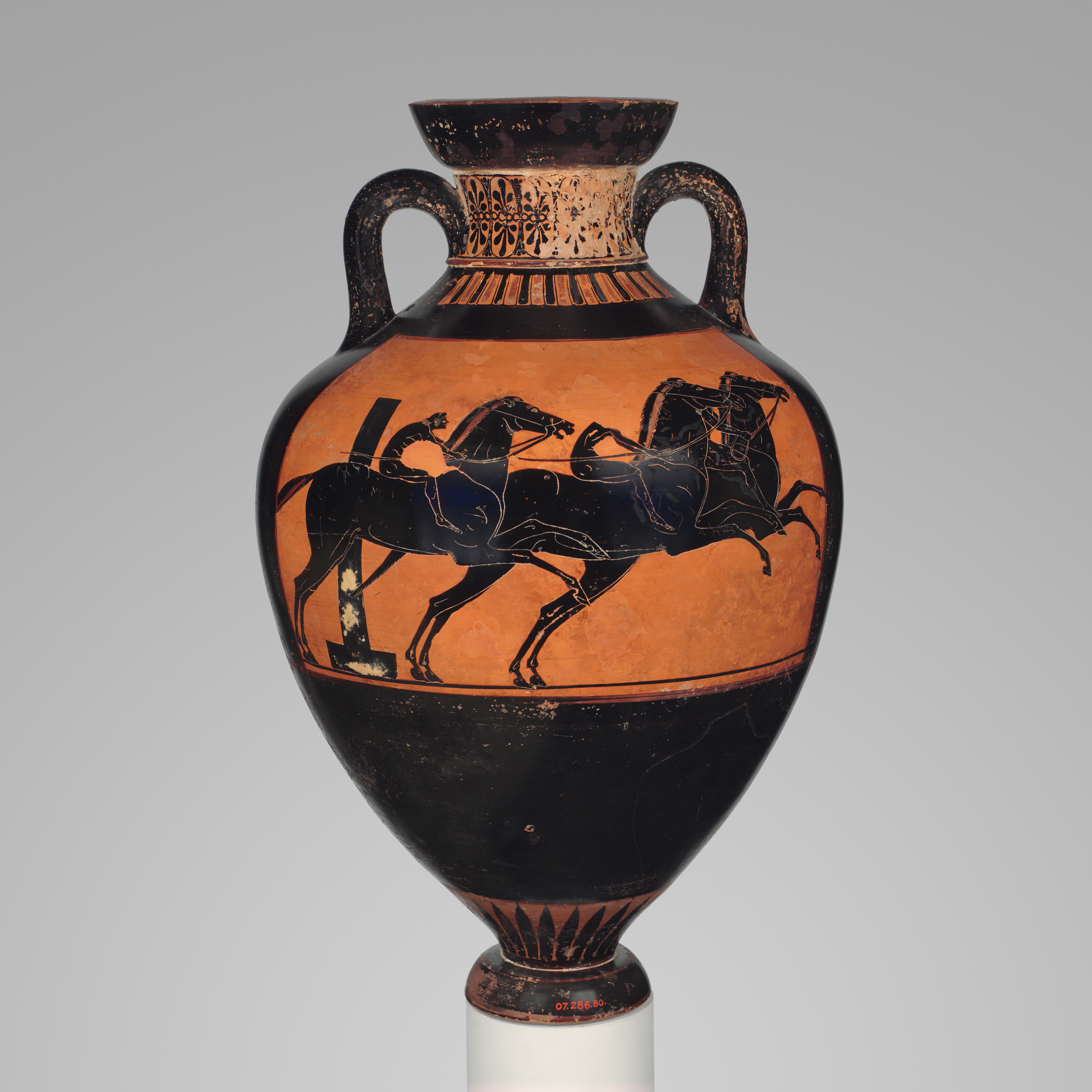
- He is credited with creating the horse [S5]S5 · Pseudo-Apollodorus, Library (Bibliotheca)c. 1st–2nd c. CE (transmits earlier)text.
- Rival of Athena for Athens — he gave the sea/spring, she gave the olive [S5]S5 · Pseudo-Apollodorus, Library (Bibliotheca)c. 1st–2nd c. CE (transmits earlier)text[S6]S6 · Pausanias, Description of Greecec. 150–180 CEtext.
- Poseidon's 'rivalry' with Zeus is literary (Iliad); in cult he was a benevolent local patron at many coastal sites [S2]S2 · Homer, Iliadc. 750 BCEtextOpen source ↗[S6]S6 · Pausanias, Description of Greecec. 150–180 CEtext.
Connections
3 rows · 6 recorded edges — identical notes are grouped
Family & kinship
Conflict & enmity
Artifacts
Their corner of the divine world
- parentage
- marriage ♥
far = primordials · medium = all · close = detail — scroll/pan, click a deity to focus
3 stories
The Hesiodic Creation (Cosmogony)
In the Theogony, the first thing is Chaos, from which come Gaia (Earth), Tartarus, Eros, and Nyx. Gaia bears Ouranos (Sky), and the union of Gaia and Ouranos produces the Titans, the Cyclopes, and the Hecatoncheires [S1]S1 · Hesiod, Theogonyc. 700 BCEtextOpen source ↗.
Athena and Poseidon for Athens
Athena and Poseidon each offered a gift to the city: she the olive tree, he the sea (or a horse). The city chose Athena's gift, and she became its patron [S5]S5 · Pseudo-Apollodorus, Library (Bibliotheca)c. 1st–2nd c. CE (transmits earlier)text[S6]S6 · Pausanias, Description of Greecec. 150–180 CEtext.
Odysseus and the Cyclops
On his way home from Troy, Odysseus was trapped by the Cyclops Polyphemus, whom he blinded and escaped by calling himself 'Nobody' (Outis), so the other Cyclopes did not come when they heard 'Nobody is doing this' [S3]S3 · Homer, Odysseyc. 725 BCEtextOpen source ↗.
Objects they wielded, forged, or were bound to
INTERPRETIVE CLASSIFICATION · FULL PROFILE IN THE DIVINE VAULT

Depictions