Greek Mythology · deity

Athena

Ἀθηνᾶ
also: Minerva (Roman)
deitywisdomwar (strategy)craftcityreason

Goddess of wisdom, strategic war, and craft; born fully-formed from Zeus's head; patron of Athens.
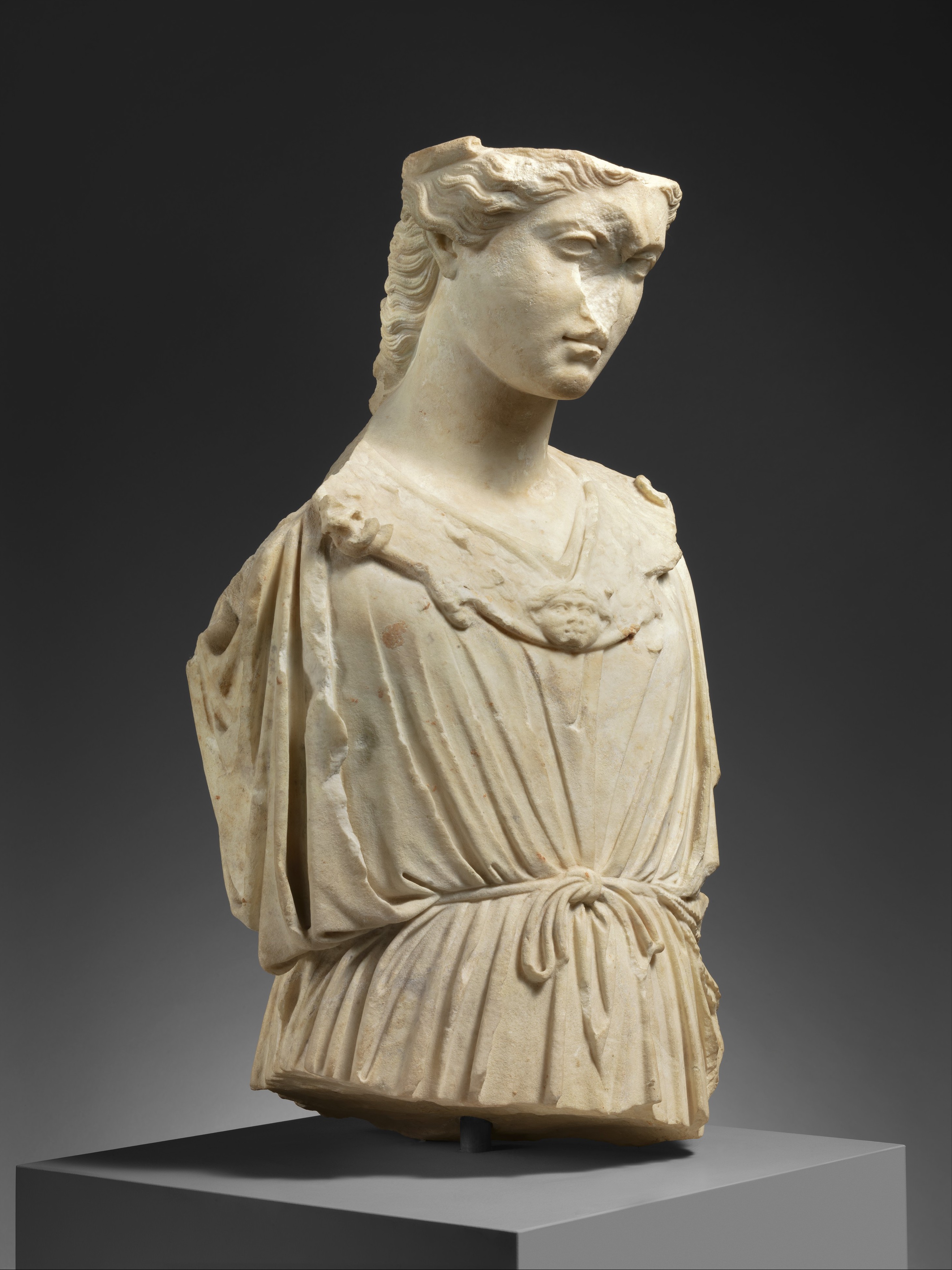
Athena, helmeted — Marble Head and Torso of Athena
Marble Head and Torso of Athena · Unknown (Roman) · 1st–2nd century CE · The Metropolitan Museum of Art · Public domain (Met Open Access)
The account

Who they are


Athena is the goddess of wisdom, strategic warfare, and craft (crafts of the city, weaving, and the arts) [S1]S1 · Hesiod, Theogonyc. 700 BCEtextOpen source ↗[S2]S2 · Homer, Iliadc. 750 BCEtextOpen source ↗[S4]S4 · Homeric Hymnsc. 700–300 BCEtext. She is born in a remarkable and unique way: from the head of Zeus, fully grown and armored, after Zeus swallowed her mother Metis (the goddess of cunning) when pregnant, on the advice that their child would surpass him [S1]S1 · Hesiod, Theogonyc. 700 BCEtextOpen source ↗[S4]S4 · Homeric Hymnsc. 700–300 BCEtext[S5]S5 · Pseudo-Apollodorus, Library (Bibliotheca)c. 1st–2nd c. CE (transmits earlier)text. (In the Theogony her mother is Metis; the Iliad names her mother as Metis too, though a variant gives Dione — a minor discrepancy we note.) [S1]S1 · Hesiod, Theogonyc. 700 BCEtextOpen source ↗[S2]S2 · Homer, Iliadc. 750 BCEtextOpen source ↗ She is the patron deity of Athens (the Parthenon was her temple), and her rivalry with Poseidon over the city's patronage is one of the founding myths of Athens — she gave the olive tree and won [S5]S5 · Pseudo-Apollodorus, Library (Bibliotheca)c. 1st–2nd c. CE (transmits earlier)text[S6]S6 · Pausanias, Description of Greecec. 150–180 CEtext. She is the protector of heroes (Odysseus, Perseus, Theseus, Odysseus's son Telemachus), and she is associated with reason, law, and the city-state (polis) [S2]S2 · Homer, Iliadc. 750 BCEtextOpen source ↗[S3]S3 · Homer, Odysseyc. 725 BCEtextOpen source ↗[S6]S6 · Pausanias, Description of Greecec. 150–180 CEtext.
Worth knowing
  • Born fully armed from Zeus's head [S1]S1 · Hesiod, Theogonyc. 700 BCEtextOpen source ↗[S4]S4 · Homeric Hymnsc. 700–300 BCEtext.
  • Patron of Athens — the Parthenon was her temple [S6]S6 · Pausanias, Description of Greecec. 150–180 CEtext.
  • Gave the olive tree, winning Athens over Poseidon [S5]S5 · Pseudo-Apollodorus, Library (Bibliotheca)c. 1st–2nd c. CE (transmits earlier)text[S6]S6 · Pausanias, Description of Greecec. 150–180 CEtext.
  • Protector of heroes: Odysseus, Perseus, Theseus [S2]S2 · Homer, Iliadc. 750 BCEtextOpen source ↗[S3]S3 · Homer, Odysseyc. 725 BCEtextOpen source ↗[S5]S5 · Pseudo-Apollodorus, Library (Bibliotheca)c. 1st–2nd c. CE (transmits earlier)text.
Uncertainties & variants
  • Her mother is Metis in the Theogony and Iliad (a variant gives Dione in the Iliad) — stored as a minor variant [S1]S1 · Hesiod, Theogonyc. 700 BCEtextOpen source ↗[S2]S2 · Homer, Iliadc. 750 BCEtextOpen source ↗.
Relationships (4)

Connections


Family & kinship

PARENT_OFZeus — Zeus is the parent of Athena (born from his head).[S1] [S4]
PARENT_OFMetis — Metis is the mother of Athena (Zeus swallowed her pregnant).[S1] [S4]

Conflict & enmity

ENEMY_OFPoseidon — Athena and Poseidon rivaled for the patronage of Athens.[S5] [S6]

Artifacts

OWNSAegis — The Aegis is the shield / breastplate of Athena.[[S1]]
Local graph

Their corner of the divine world


View
hierarchical — generations top → bottom, partners side by side
Overlays
FocusAthenaGreek
GREEK · 41variantvariant♥♥♥♥♥♥♥♥♥♥AegisHelmet of HadesCaduceus of Her…Trident of Pose…Thunderbolt of …Alcmenamortalthe mortal mother of Heracles1 relationsAndromedamortalthe rescued princess2 relationsAphroditedeitylove7 relationsAtlasdeitythe sky (bore)1 relationsChaosprimordialorigin2 relationsDanaemortalthe mortal mother of Perseus1 relationsDemeterdeityharvest6 relationsEchidnamonsterthe monster-mother2 relationsGaiadeityearth6 relationsHadesdeitythe dead7 relationsHeradeitymarriage8 relationsHestiadeityhearth1 relationsLetodeitymotherhood (as mother of Apollo/Artemis)2 relationsMedusamonsterthe Gorgon3 relationsMetisdeitycounsel2 relationsOceanusdeitythe great world-river1 relationsOdysseusherocunning2 relationsPenelopemortalthe faithful wife of Odysseus2 relationsPoseidondeitythe sea6 relationsRheadeitymotherhood2 relationsSemelemortalthe mortal mother of Dionysus1 relationsTethysdeitythe primordial sea1 relationsTyphonmonsterthe great monster7 relationsCerberusmonsterthe guardian of the underworld3 relationsErosdeitylove2 relationsHebedeityyouth2 relationsHephaestusdeityfire6 relationsMaiadeitythe nymph2 relationsUranusprimordialsky6 relationsPersephonedeitythe underworld2 relationsTelemachusmortalthe son of Odysseus2 relationsCronusdeitytime (later association)9 relationsZeusdeitysky29 relationsApollodeitysun (later)4 relationsAresdeitywar (violence, bloodshed)3 relationsArtemisdeitythe hunt3 relationsAthenadeitywisdom4 relationsDionysusdeitywine3 relationsHeraclesherostrength7 relationsHermesdeitymessengers5 relationsPerseusheroheroism8 relations
zoom 2.89× · close
  • parentage
  • marriage ♥

far = primordials · medium = all · close = detail — scroll/pan, click a deity to focus

Myths featuring Athena

4 stories

The Birth of Athena

Zeus swallowed Metis, pregnant with their child, to avert the prophecy that the child would overthrow him. Athena was born fully formed and armored from Zeus's head [S1]S1 · Hesiod, Theogonyc. 700 BCEtextOpen source ↗[S4]S4 · Homeric Hymnsc. 700–300 BCEtext[S5]S5 · Pseudo-Apollodorus, Library (Bibliotheca)c. 1st–2nd c. CE (transmits earlier)text.

READ THE STORY →

Athena and Poseidon for Athens

Athena and Poseidon each offered a gift to the city: she the olive tree, he the sea (or a horse). The city chose Athena's gift, and she became its patron [S5]S5 · Pseudo-Apollodorus, Library (Bibliotheca)c. 1st–2nd c. CE (transmits earlier)text[S6]S6 · Pausanias, Description of Greecec. 150–180 CEtext.

READ THE STORY →

Perseus and Medusa

Sent to fetch Medusa's head, Perseus was aided by Athena (mirror-shield) and Hermes (winged sandals, sickle); he beheaded the Gorgon, and Pegasus and Chrysaor sprang from her blood [S1]S1 · Hesiod, Theogonyc. 700 BCEtextOpen source ↗[S5]S5 · Pseudo-Apollodorus, Library (Bibliotheca)c. 1st–2nd c. CE (transmits earlier)text.

READ THE STORY →

Odysseus and the Cyclops

On his way home from Troy, Odysseus was trapped by the Cyclops Polyphemus, whom he blinded and escaped by calling himself 'Nobody' (Outis), so the other Cyclopes did not come when they heard 'Nobody is doing this' [S3]S3 · Homer, Odysseyc. 725 BCEtextOpen source ↗.

READ THE STORY →

Artifacts of Athena

Objects they wielded, forged, or were bound to

INTERPRETIVE CLASSIFICATION · FULL PROFILE IN THE DIVINE VAULT

Artworks

Depictions

Athena, helmeted — Marble Head and Torso of Athena
Marble Head and Torso of Athena · Unknown (Roman) · 1st–2nd century CE · The Metropolitan Museum of Art · Public domain (Met Open Access)
Marble Head and Torso of Athena · 1st–2nd century CE
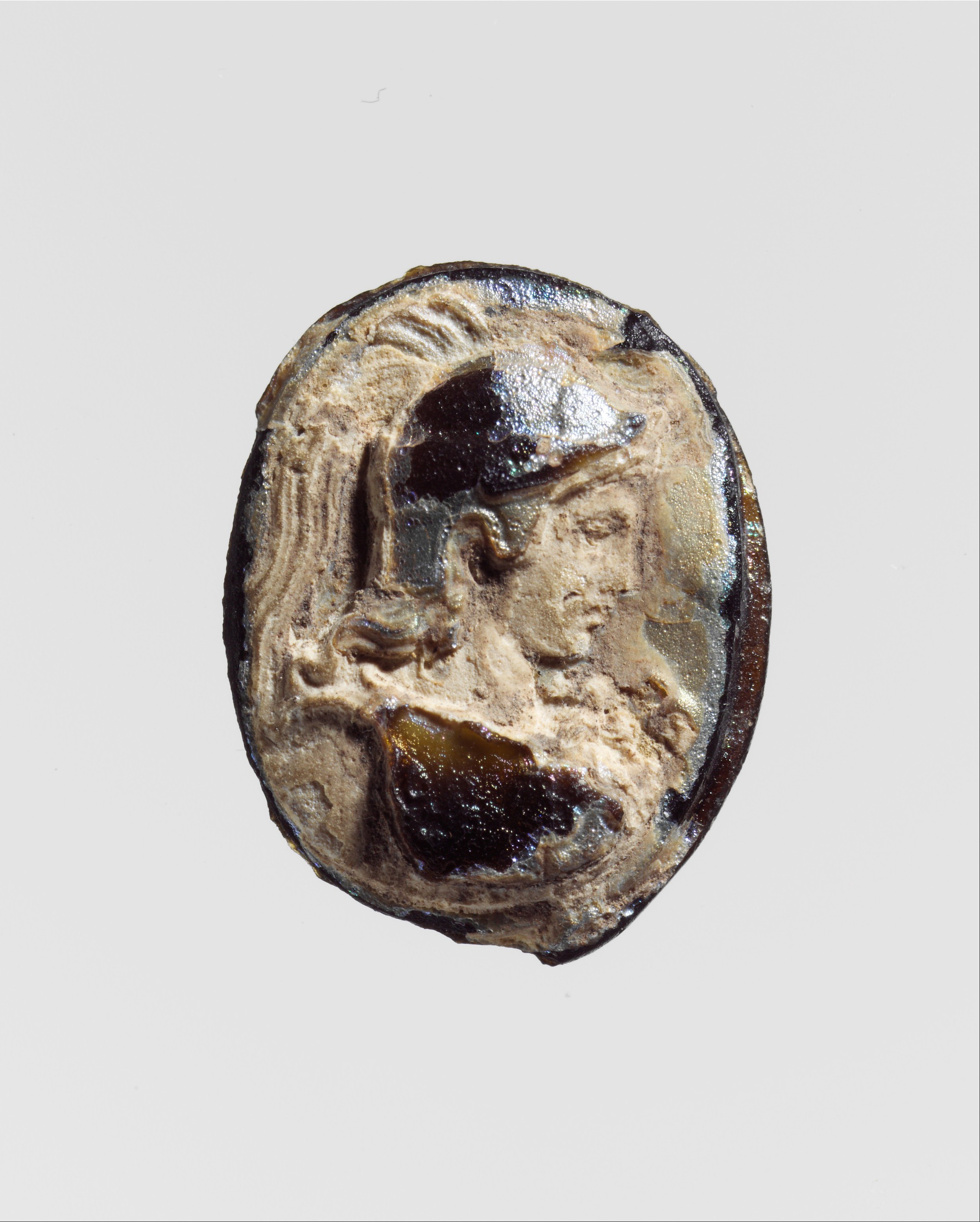
Athena, bust in cameo — Glass Cameo: Bust of Athena
Glass Cameo: Bust of Athena · Unknown (Hellenistic/Roman) · 1st century BCE – 3rd century CE · The Metropolitan Museum of Art · Public domain (Met Open Access)
Glass Cameo: Bust of Athena · 1st century BCE – 3rd century CE
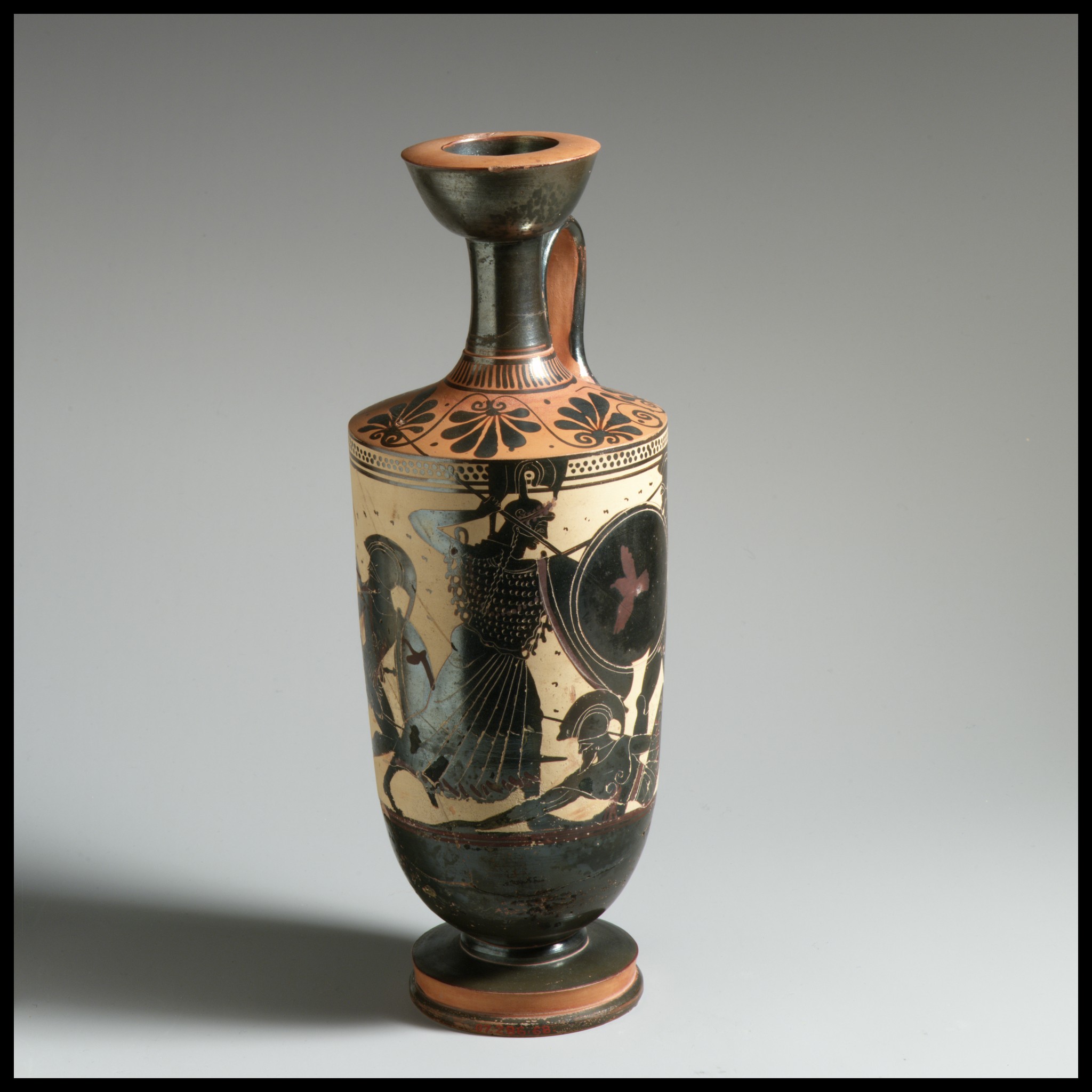
Athena on a funerary lekythos — Terracotta Lekythos (Oil Flask) with Athena
Terracotta Lekythos (Oil Flask) with Athena · Athena Painter · 1st quarter of 5th century BCE · The Metropolitan Museum of Art · Public domain (Met Open Access)
Terracotta Lekythos (Oil Flask) with Athena · 1st quarter of 5th century BCE
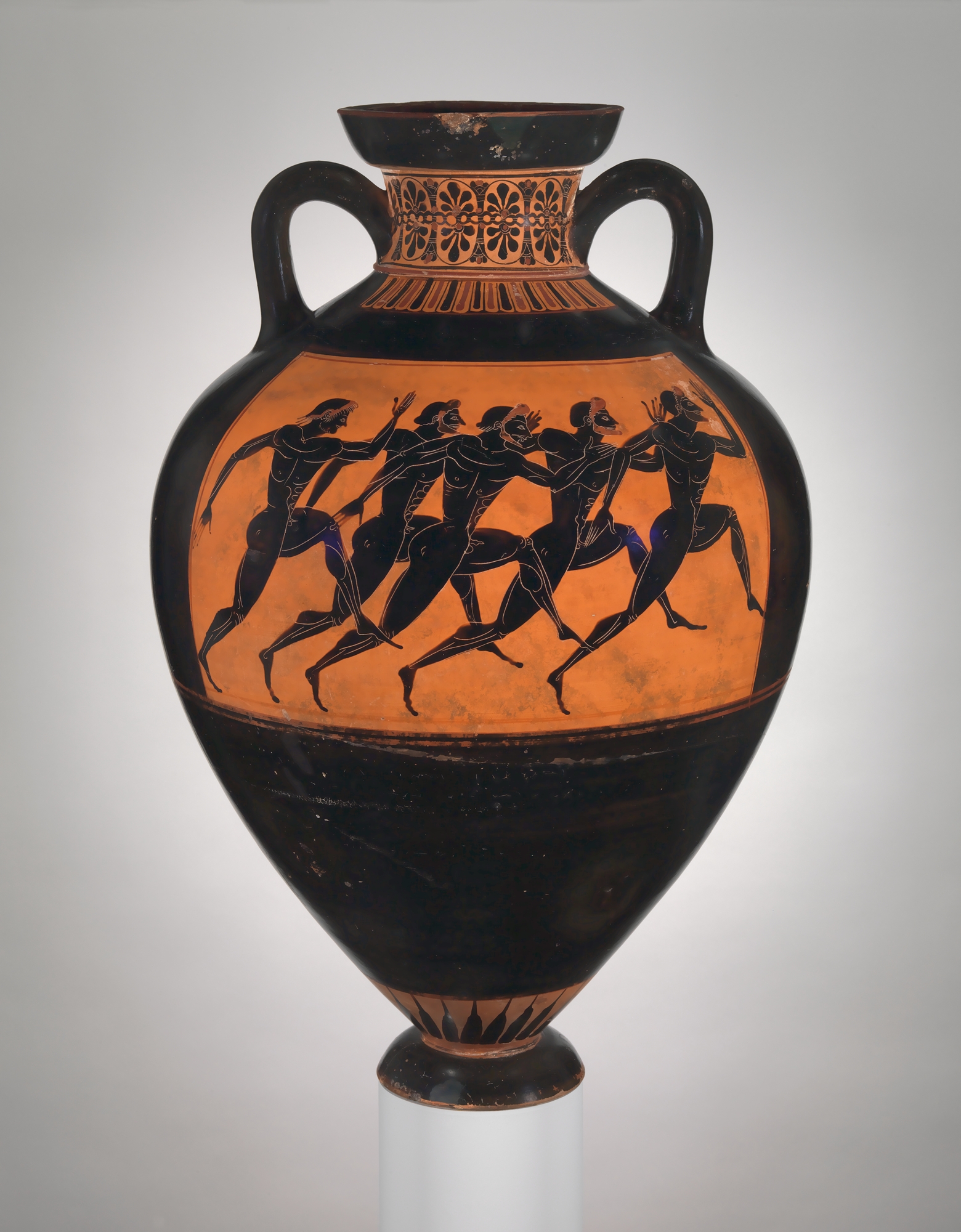
Athena Promachos; boxers on reverse — Panathenaic Prize Amphora (Euphiletos Painter)
Panathenaic Prize Amphora (Euphiletos Painter) · Euphiletos Painter · ca. 530 BCE · The Metropolitan Museum of Art · Public domain (Met Open Access)
Panathenaic Prize Amphora (Euphiletos Painter) · ca. 530 BCE
← Greek MythologyAll galleries