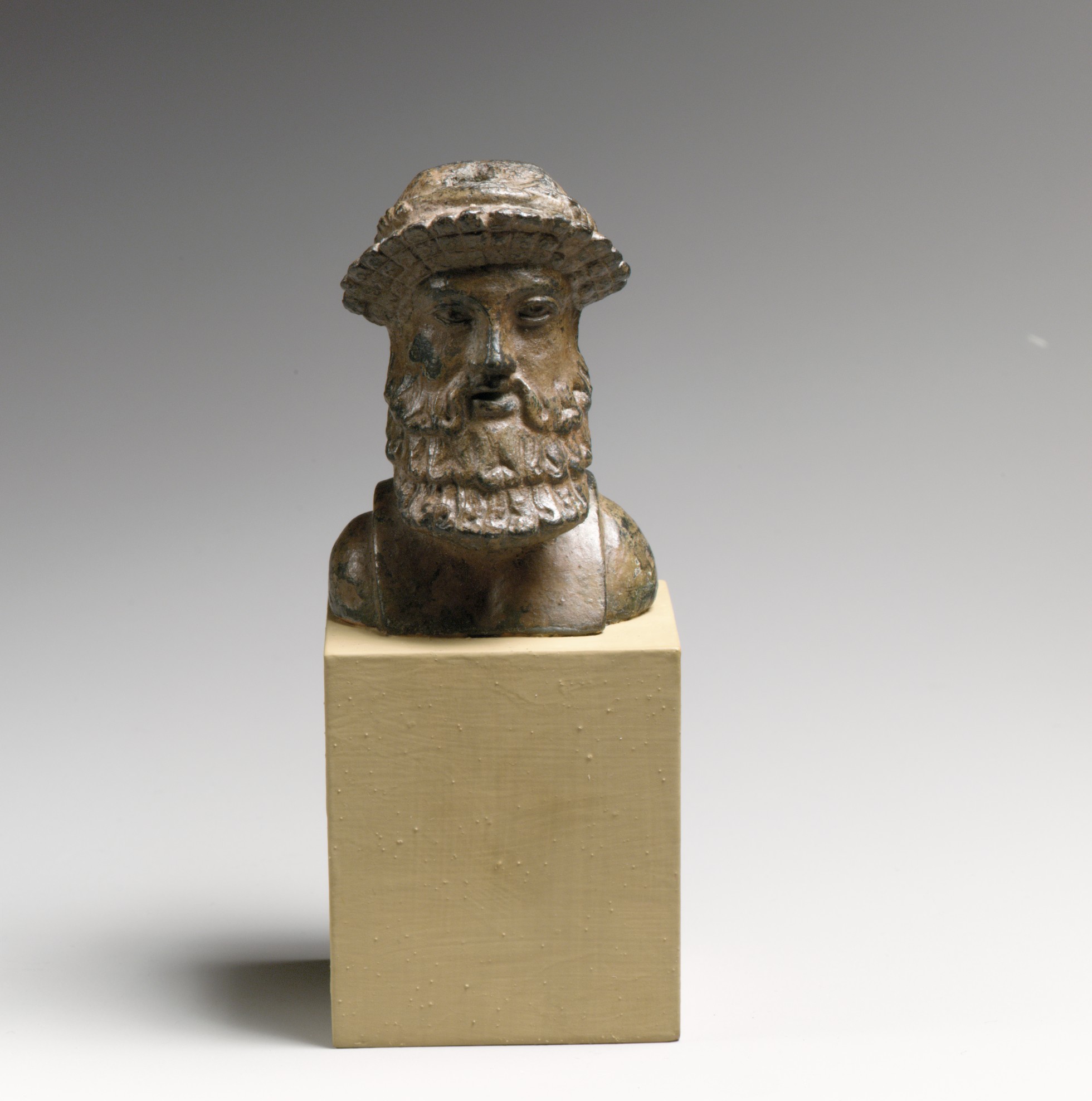
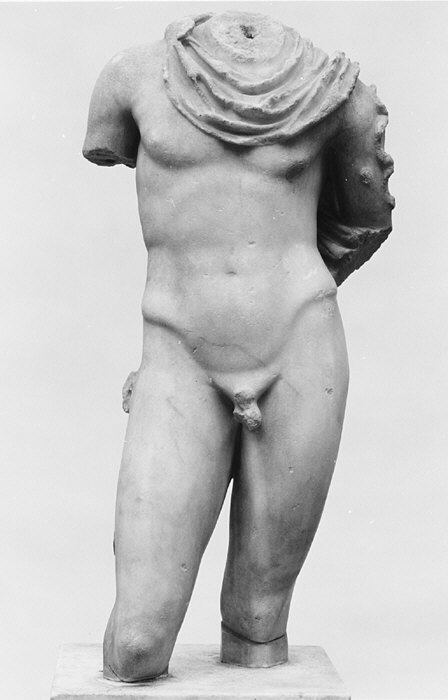
Greek Mythology · deity
Hermes
Ἑρμῆς
also: Mercury (Roman)
deitymessengerstravelersthievescommercecattlethe boundaryguiding the dead
Messenger of the gods, god of travelers, commerce, and thieves; guide of souls to the underworld (psychopomp).
The account
Who they are
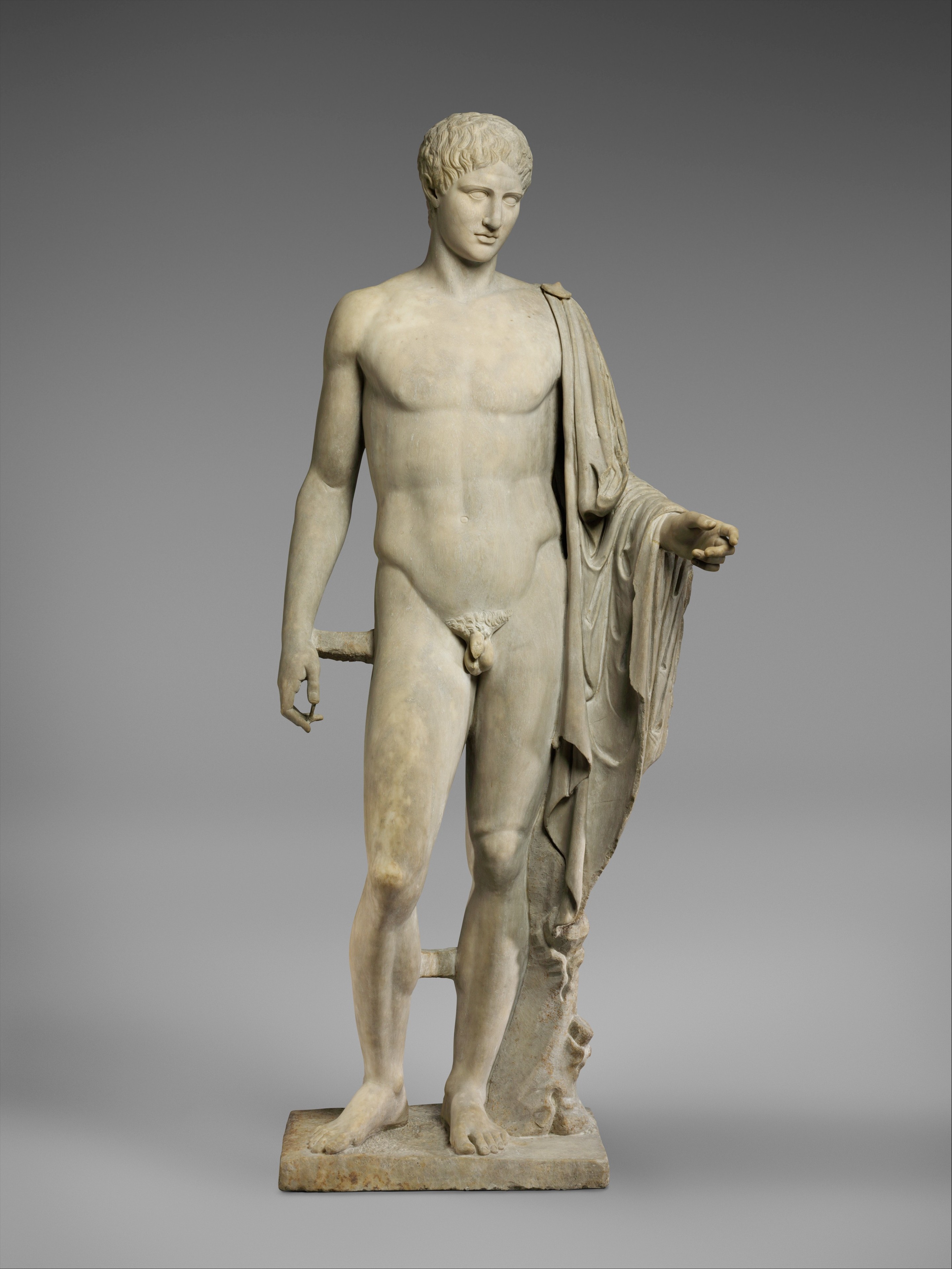
Hermes (Mercury) is the messenger of the gods and the god of a remarkably wide range of activities: travelers, commerce, cattle, thievery (he is the divine patron of cunning and the 'trickster'), and the boundary (he is Hermes 'the guide' at crossroads) [S1]S1 · Hesiod, Theogonyc. 700 BCEtextOpen source ↗[S2]S2 · Homer, Iliadc. 750 BCEtextOpen source ↗[S4]S4 · Homeric Hymnsc. 700–300 BCEtext[S5]S5 · Pseudo-Apollodorus, Library (Bibliotheca)c. 1st–2nd c. CE (transmits earlier)text. Son of Zeus and the nymph Maia, he is a child-prodigy: on the day of his birth he stole Apollo's cattle and invented the lyre from a tortoise shell, then traded it to Apollo [S4]S4 · Homeric Hymnsc. 700–300 BCEtext[S5]S5 · Pseudo-Apollodorus, Library (Bibliotheca)c. 1st–2nd c. CE (transmits earlier)text. His most solemn role is as psychopomp — the guide who leads the souls of the dead to the underworld (he escorts Persephone, he guides Odysseus's crew's dead, etc.) [S3]S3 · Homer, Odysseyc. 725 BCEtextOpen source ↗[S4]S4 · Homeric Hymnsc. 700–300 BCEtext. He is the patron of thieves, merchants, and travelers, and his wand (the caduceus, winged and entwined by two serpents) is his signature [S4]S4 · Homeric Hymnsc. 700–300 BCEtext[S5]S5 · Pseudo-Apollodorus, Library (Bibliotheca)c. 1st–2nd c. CE (transmits earlier)text.
Worth knowing
- Stole Apollo's cattle the day he was born and invented the lyre [S4]S4 · Homeric Hymnsc. 700–300 BCEtext[S5]S5 · Pseudo-Apollodorus, Library (Bibliotheca)c. 1st–2nd c. CE (transmits earlier)text.
- Psychopomp — guide of the dead to the underworld [S3]S3 · Homer, Odysseyc. 725 BCEtextOpen source ↗[S4]S4 · Homeric Hymnsc. 700–300 BCEtext.
- The caduceus (winged staff) is his signature [S4]S4 · Homeric Hymnsc. 700–300 BCEtext[S5]S5 · Pseudo-Apollodorus, Library (Bibliotheca)c. 1st–2nd c. CE (transmits earlier)text.
- Patron of thieves, merchants, and travelers [S4]S4 · Homeric Hymnsc. 700–300 BCEtext[S5]S5 · Pseudo-Apollodorus, Library (Bibliotheca)c. 1st–2nd c. CE (transmits earlier)text.
Relationships (5)
Connections
4 rows · 5 recorded edges — identical notes are grouped
Family & kinship
Alliances & rule
ALLY_OFApollo — Hermes traded the lyre to Apollo after stealing his cattle (they became friends).[S4] [S5]
Artifacts
OWNSCaduceus of Hermes — The caduceus is the staff of Hermes.[[S1]]
Local graph
Their corner of the divine world
Viewhierarchical — generations top → bottom, partners side by side
Overlays
FocusHermesGreek
- parentage
- marriage ♥
far = primordials · medium = all · close = detail — scroll/pan, click a deity to focus
1 story
Perseus and Medusa
Sent to fetch Medusa's head, Perseus was aided by Athena (mirror-shield) and Hermes (winged sandals, sickle); he beheaded the Gorgon, and Pegasus and Chrysaor sprang from her blood [S1]S1 · Hesiod, Theogonyc. 700 BCEtextOpen source ↗[S5]S5 · Pseudo-Apollodorus, Library (Bibliotheca)c. 1st–2nd c. CE (transmits earlier)text.
Objects they wielded, forged, or were bound to
INTERPRETIVE CLASSIFICATION · FULL PROFILE IN THE DIVINE VAULT

Depictions